Pärnu Greenlights Detailed Planning for the Audru E-Fuels Plant: A Baltic Developer Bets on Homegrown Molecules
Pärnu has initiated the detailed planning for Utilitas Wind's Audru e-fuels plant, a Power-to-X facility planned at up to 300 MW and up to 160,000 tonnes of e-fuels a year. Here's why this Baltic-developed project signals the region's drive toward indigenous alternative fuel production.
PtXBaltic
5/25/20265 min read
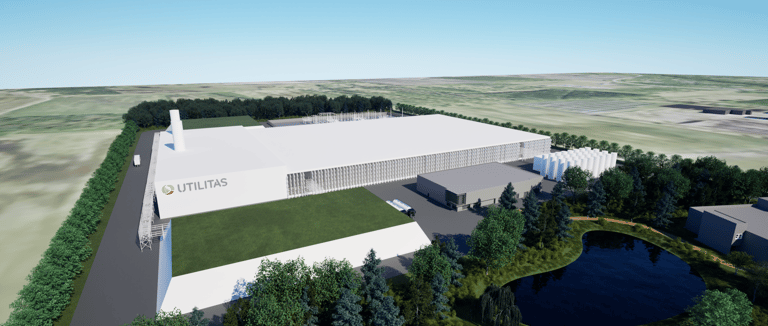
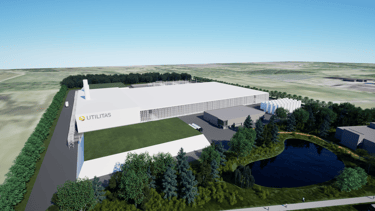
Pärnu has initiated the detailed planning for an e-fuels production facility in Audru, developed by Utilitas Wind. It's a procedural milestone with an outsized signal: the Baltics are no longer waiting for someone else to build their alternative fuels future — they're building it themselves.
The News: A Planning Process Begins
On 22 May 2026, the Pärnu city government initiated the detailed planning process for an e-fuels production unit in Audru. In planning terms it's an early step, not a final investment decision. But it's the step that turns an idea into a project with a site, a process, and a public timeline. A municipality has formally opened the door to a facility that would convert renewable electricity into green hydrogen, then synthesise that hydrogen into fuels that planes, ships and chemical plants can actually use.
The developer matters here. Utilitas Wind is the wind-energy arm of Estonia's largest renewable energy producer — the leading wind developer across Estonia, Latvia and Lithuania, and the company already running Estonia's first green hydrogen production unit at the Väo complex in Tallinn. This isn't a speculative concept from an unknown promoter. It's an established operator committing land, planning effort and an environmental assessment to a project in southwestern Estonia.
From Electrons to Molecules: What the Plant Would Do
The concept follows the classic Power-to-X chain. Renewable electricity feeds an electrolyser, which splits water into hydrogen. That hydrogen is then synthesised into higher-value e-fuels — e-methanol, e-methane, or aviation fuel, depending on the technology and offtake decisions taken later.
The numbers under discussion are substantial. The planned maximum capacity reaches up to 300 MW, which could produce up to 30,000 tonnes of green hydrogen per year, and from that up to 160,000 tonnes of e-fuels annually. We'd flag that these are ceiling figures at a very early stage — the exact technology and final fuel mix are explicitly still to be settled through planning and feasibility studies. But even as a planning envelope, a 300 MW facility puts Audru firmly in the conversation about industrial-scale e-fuels in the region.
As Utilitas Wind's hydrogen solutions development manager Jüri-Mikk Udam framed it, e-fuels are a solution above all in sectors where replacing fossil fuels with electricity is not realistic — aviation, maritime and the chemical industry. That's the honest case for Power-to-X. It's not about powering your car. It's about the hard-to-abate corners of the economy that batteries alone can't reach.
Why Indigenous Production Is the Real Story
Here's the part Baltic hydrogen ecosystem stakeholders should sit up for. Udam's second point was about value: exporting e-fuels would lift Estonia's competitiveness, and crucially, it would let the country add value to electricity produced locally rather than shipping raw electrons across a border for someone else to monetise.
That's the indigenous production argument in a single sentence. For two decades the Baltic energy story was a story about dependence — on imported gas, on a single dominant supplier, on infrastructure built to point eastward. Synchronisation with the Continental European grid in early 2025 closed one chapter of that. Projects like Audru open the next: a region that doesn't just consume energy security as a policy goal, but manufactures the fuels that underwrite it.
And Audru isn't alone. Just down the road, Singapore-backed Destiny Energy is developing the Pärnu P2X Hub, planned as the first e-methanol plant in the Baltics, targeting production from 2028. Two e-fuels projects converging on a single Estonian county isn't a coincidence — it's the early shape of a cluster. Set it alongside CIS Liepāja structuring green hydrogen at scale in Latvia and the NorSAF aviation fuel work beside it, and a pattern emerges: Baltic developers are originating their own projects, on their own sites, for their own strategic reasons.
See the Audru E-Fuels Plant description in and the wider Baltic pipeline in our Projects List:
Utilitas Audru 300 MW e-Fuels plant Pärnu, (Estonia)
Location, Logistics and Timing
Audru wasn't chosen at random. The site already sits within a production zone under the valid Audru comprehensive plan, and the Pärnu county plan designates the surrounding area for business and production use — removing a layer of zoning friction that kills many greenfield energy projects before they start.
Then there's the logistics geometry. Audru sits at a junction close to both Rail Baltica and Via Baltica, the corridors that will tie the Baltics into the wider European network. For a facility that may eventually move fuel to export markets, sitting on those arteries matters. Notably, the developer has been candid that the early-2030s timeline means the project doesn't directly count on the hydrogen corridor that Elering and others are planning, though it acknowledges that infrastructure would offer additional options if it materialises. That's a refreshingly grounded position: build the project on its own merits, treat shared infrastructure as upside rather than a dependency.
A Maturing Market, Not a Moonshot
It's worth putting e-fuels in perspective, because the hype cycle can obscure the fundamentals. Hydrogen itself isn't new — it's a roughly 100-million-tonne-per-year global industry, with the bulk still made from natural gas, used heavily in chemicals, fertilisers and refining. What's new is producing it through water electrolysis from renewable power, and synthesising it into fuels.
That part is genuinely early — but it's moving. Comparable facilities are already operating in Denmark, Finland and Norway, with output bought by names like Maersk, LEGO and Novo Nordisk. As Udam put it, that demonstrates e-fuels are a working, fast-developing industry with real demand on international markets. For Baltic developers, that's the most useful kind of validation: not a forecast, but customers already signing for molecules elsewhere.
What Happens Next
The detailed planning is the first step, not the finish line. Running in parallel is a strategic environmental impact assessment, which will surface the facility's potential environmental effects before anything is built. The developer has emphasised regular engagement with the local community, sharing information and gathering feedback on how the project could contribute to local quality of life if it goes ahead. The timetable for the planning process, public discussions and further information will be published through Pärnu's official channels.
On the economics, the local case is concrete: hundreds of jobs during construction, and 20 to 40 permanent high-skilled positions during operation, with knock-on benefits for the Pärnu county service sector. For a region building an e-fuels cluster from a standing start, those are exactly the kind of durable, qualified roles that make an industrial transition stick.
The Takeaway for the Baltic Power-to-X Ecosystem
Strip away the planning vocabulary and Audru tells a clear story. A serious Baltic developer is committing to produce alternative fuels on Baltic soil, from Baltic wind, for hard-to-abate sectors that have no other credible decarbonisation path. The capacity figures are provisional and the timeline runs to the early 2030s — this is a marathon, not a sprint. But the direction is unambiguous.
Source: Pärnu linn algatas detailplaneeringu Audru e-kütuste tehase rajamiseks