Hydrogen initiatives
We are listing here Hydrogen Initiatives & Organizations in Baltic states. Information is based on publicly available resources and our own experiences and industry insights.
Hydrogen Valley Estonia
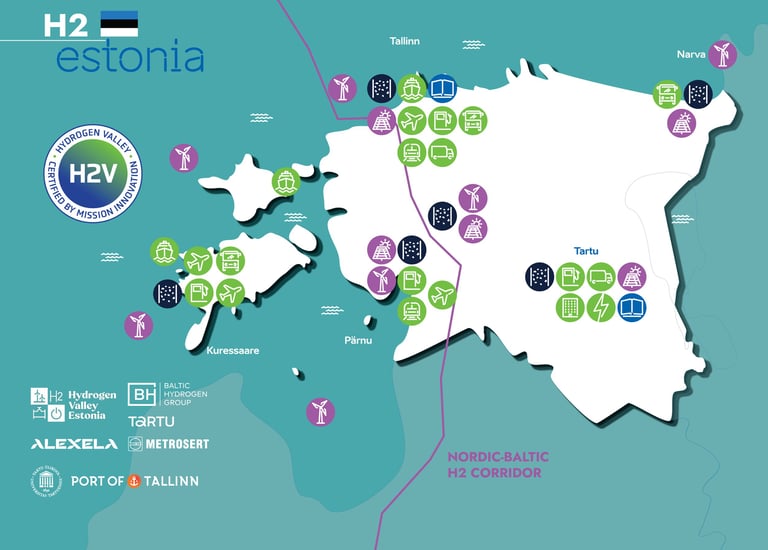
Hydrogen Valley Estonia is a nationwide initiative to establish a complete hydrogen ecosystem in Estonia, aiming to accelerate the country's energy transition and promote a green economy
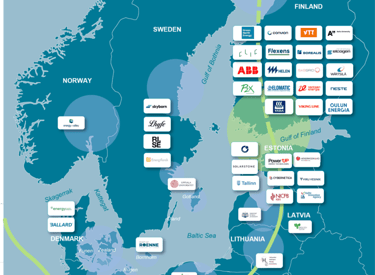
BalticSeaH2 project
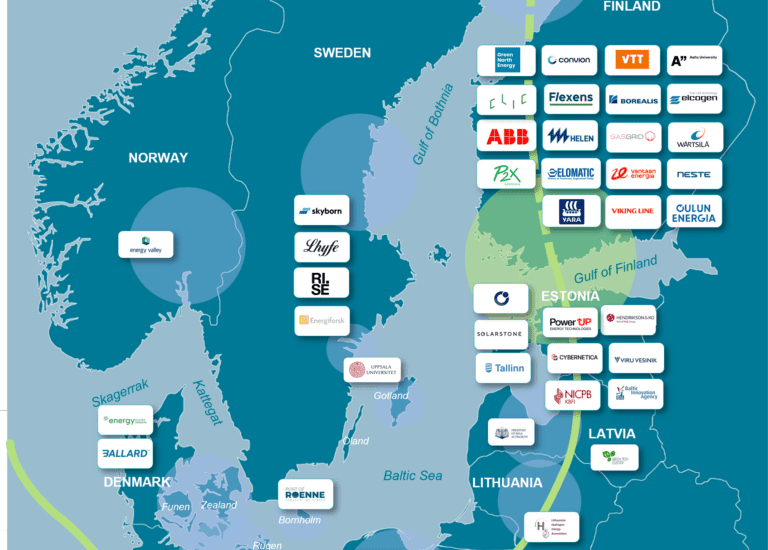
The BalticSeaH2 project aims to create Europe's first large-scale, cross-border Nordic - Baltic hydrogen valley in the Baltic Sea region
TiVo (Estonia) Students Hydrogen organization
TiVo is a student organization at TalTech (Tallinn University of Technology) focused on hydrogen technology.
Estonian Hydrogen Cluster
The Estonian Hydrogen Cluster is a collaborative industry cluster focused on developing a hydrogen economy in Estonia.
Latvian Hydrogen Alliance
Latvian Hydrogen Alliance is a collaboratinforum (round table) for private and public companies, organizations and universities aimed to collaborate in establishing Hydrogen ecosystems in Latvia and accelerating introduction of renewable Hydrogen technologies.
Lithuanian Hydrogen Energy Association (LHEA)
The Lithuanian Hydrogen Energy Association (LHEA) is a non-profit organization focused on promoting the development of hydrogen energy in Lithuania.

H2-SEAS project
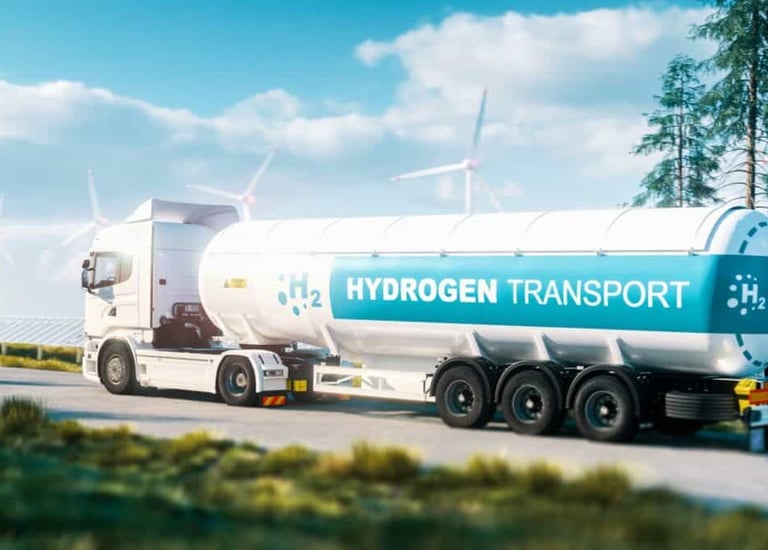
HyTruck project
The Interreg BSR project HyTruck (January 2023 - December 2025) helps public authorities design a network of hydrogen refuelling stations for large trucks, bringing the region closer to zero–emissions in road freight transport. Project unites partners from Latvia, Lithuania, Estonia, Poland, Germany, Sweden & Finland
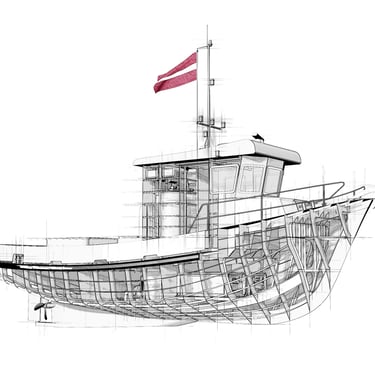
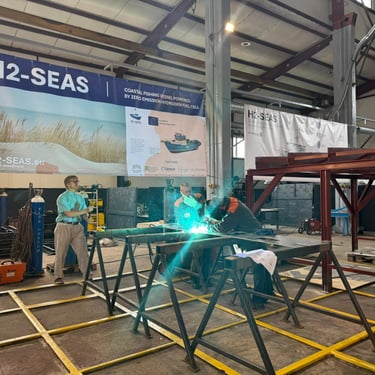
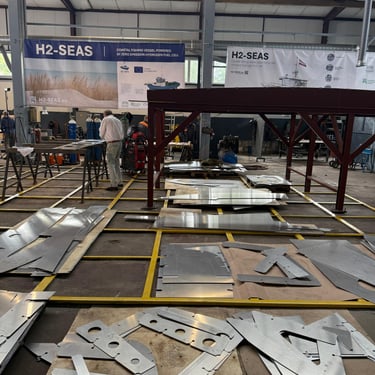
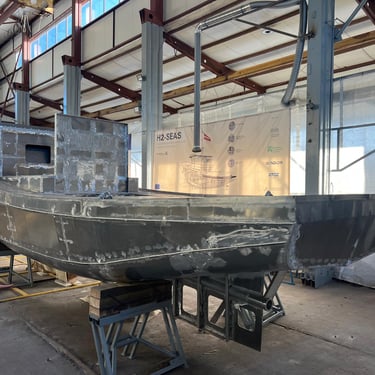
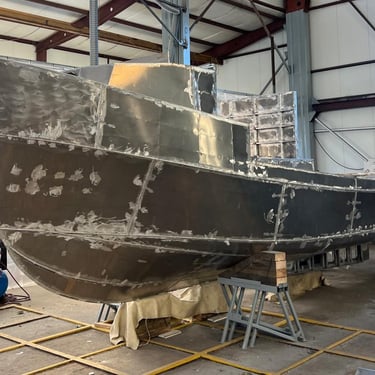
Horizon Europe project H2-SEAS is developing a hydrogen-electric fishing vessel designed to demonstrate zero-emission propulsion for small coastal fleets. The project brings hydrogen fuel cell technology into practical maritime use, supporting the transition toward a cleaner and more sustainable Baltic blue economy.
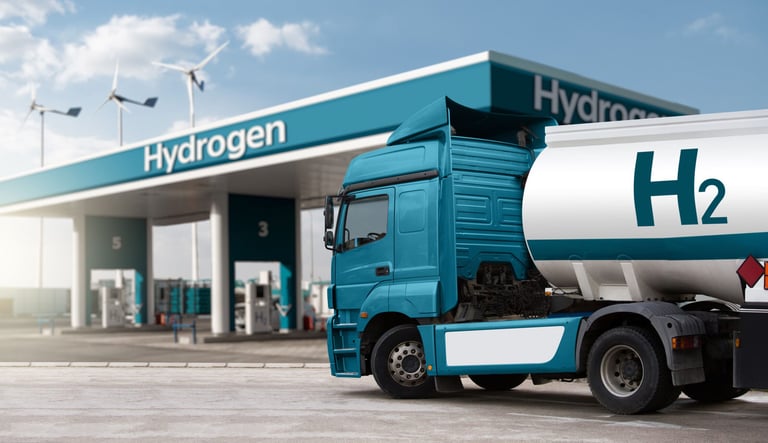
Latvian company DIGAS has developed the electronic control system that governs a hydrogen internal combustion retrofit — automating fuel injection, combustion and safety functions across the converted powertrain. Built within the MASOC Competence Centre digital products programme, it is the software layer behind Europe's first retrofitted hydrogen combustion passenger train.
Panevėžys Hydrogen Valley initiative
PUR4LH2 project
The Panevėžys Hydrogen Valley initiative is an emerging hydrogen and clean fuels ecosystem in northern Lithuania, centered on the Panevėžys industrial and logistics node along the E67 / Via Baltica corridor. A relevant regional linkage is Engerta’s biomethane activity in Panevėžys district, which adds a circular-carbon dimension to the initiative and creates future potential to connect biomethane, biogenic CO₂ and hydrogen-based fuel production into one wider green energy value chain.


HYBUHTRAIN project
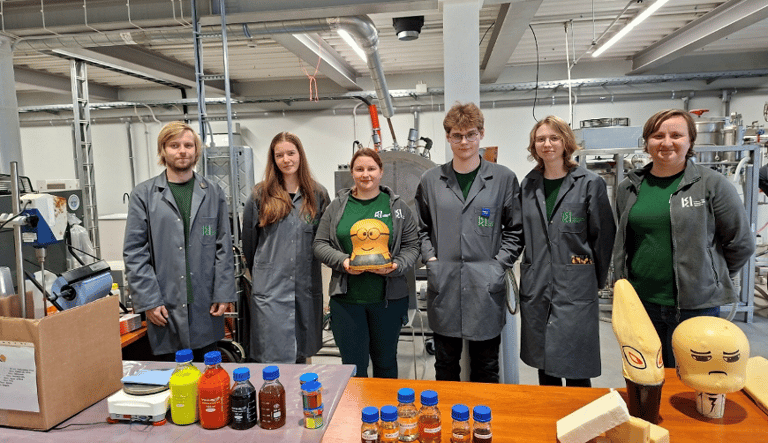
The Latvian State Institute of Wood Chemistry project PUR4LH2 is developing rigid polyurethane foam to insulate liquid hydrogen tanks for future zero-emission aircraft. Built on renewable feedstock and low-GWP chemistry, it brings space-grade cryogenic know-how — proven on Ariane 6 — into civil aviation, placing Baltic deeptech materials science directly in the hydrogen value chain.


HYIPTRAIN project
HYBUHTRAIN retrofits European diesel trains with a hydrogen engine and battery hybrid system, cutting hydrogen use while running emission-free through stations. Led by Latvian company DIGAS with Riga Technical University providing independent scientific validation, backed by EIT Urban Mobility.
Hydrogen Valley Estonia
The first nationwide Hydrogen Valley ever is being developed in close cooperation between three regions, one university and five of the largest companies in energy and industry in Estonia. They have formed a Management Team and a Steering Group to build up the strategy, the governance, and the European recognition of the Valley.
These nine initiating partners are open to additional partners to strengthen the Valley and its strategy.
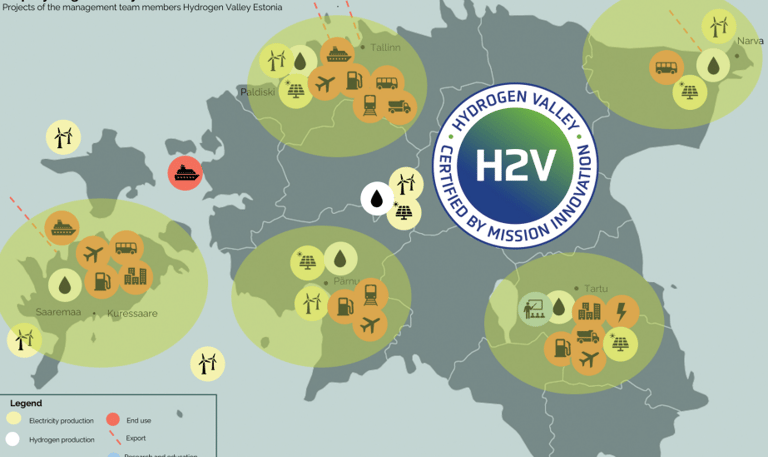
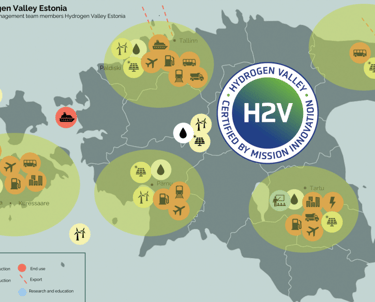
The first nationwide Hydrogen Valley ever is being developed in close cooperation between three regions, one university and five of the largest companies in energy and industry in Estonia. They have formed a Management Team and a Steering Group to build up the strategy, the governance, and the European recognition of the Valley.
These nine initiating partners are open to additional partners to strengthen the Valley and its strategy.
Hydrogen Valley Estonia’s (HVE) main objectives in establishing the governance are the following:
HVE aims to be a neutral body where roles and responsibilities of the partners are clearly defined;
HVE wants to base our governance on our shared ambitions and our aim to collaborate with each other and third parties;
HVE aims to bring the right mindset on hydrogen to Estonia. A mindset based on working together on a strategic level and thereby finding synergies, both between partners and between links in the value chain;
HVE wants to facilitate in providing Estonia with a long-term framework, built up by real projects developing over time;
HVE aims to function as a forum for knowledge on hydrogen that will enable parties to better understand each other and the hydrogen value chain.
Based on these ground rules, HVE further aims to provide national government with a clear representation of regions and companies on hydrogen. As such, HVE aims to be the primary hydrogen engagement partner for national government on policy development and the development of policy instruments. Furthermore, with such a strong representation of regions and companies, HVE aims to become the go-to organization for cross-border cooperation on hydrogen. From that perspective, HVE is investigating EU recognition and cross border partnerships.
BalticSeaH2 Project
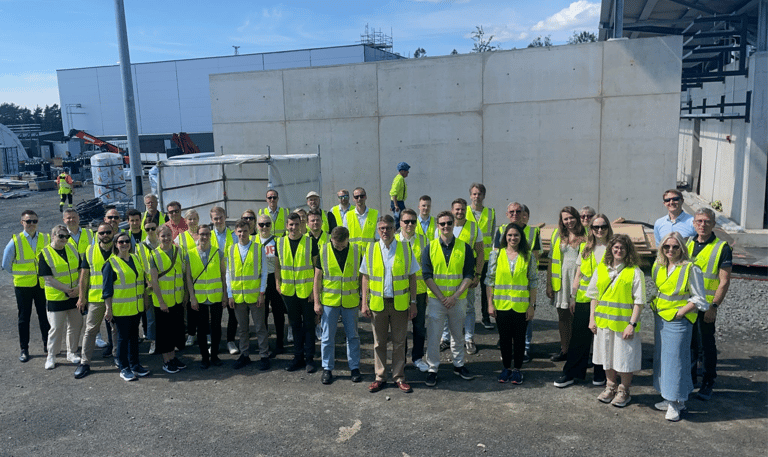
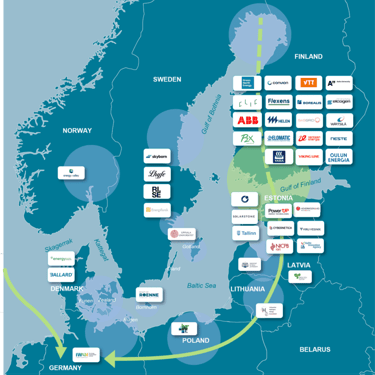
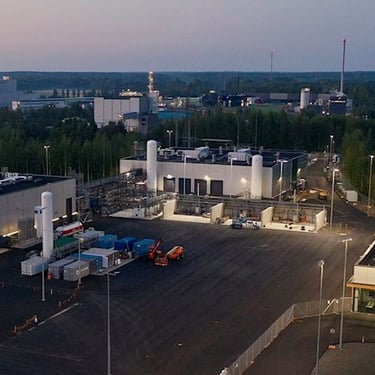
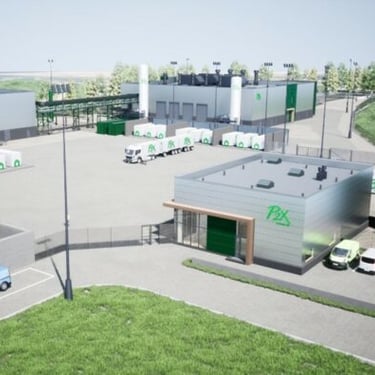
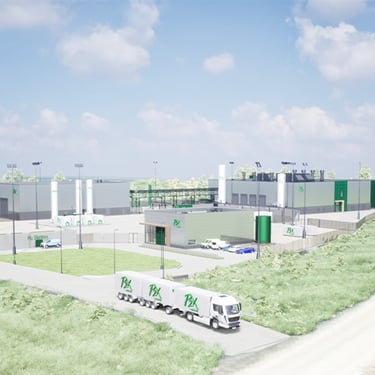
The BalticSeaH2 project is a cross-border initiative focused on establishing a large-scale hydrogen valley across the Baltic Sea region, particularly between Finland and Estonia. The project aims to create a comprehensive hydrogen economy, boost energy self-sufficiency, and reduce carbon emissions within the region. It involves 40 partners from nine countries and aims to demonstrate over 20 hydrogen use cases, with a total investment target of over 4 billion euros. The project also includes research into hydrogen production and usage, feasibility studies, and pilot projects.
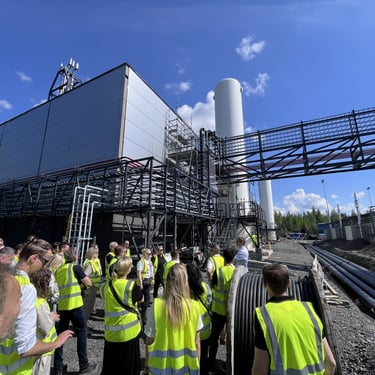
The main (Flagship) valley is between southern Finland and Estonia. The area between Finland and Estonia is an optimal location for a cross-border hydrogen market. The necessary infrastructure – natural gas pipelines, electricity grids, and active marine traffic – already exist in the Gulf of Finland. The project will also support the reduction of the carbon emissions from existing marine traffic. In addition, Gasgrid Finland is already preparing hydrogen infrastructure: Nordic-Baltic Hydrogen Corridor, Baltic Sea Hydrogen Collector and Nordic Hydrogen Route enable strong growth for hydrogen economy and hydrogen markets in the Baltic Sea region.
BalticSeaH2 projects enables over 20 use cases and over 10 investment cases to showcase the different sectors of hydrogen economy, adding up to 3 billion euros in total investments. The production potential for hydrogen will reach 60 000 tonnes of hydrogen annually by the end of the project. The hydrogen and its derivatives can be utilised or sold by different industries brought together by the project.
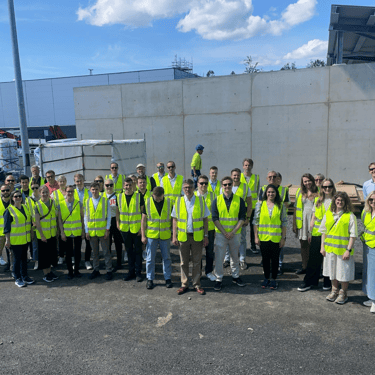
The project started in June 2023 and lasts five years. The consortium includes 40 partners from nine Baltic Sea region countries: Finland, Estonia, Latvia, Lithuania, Poland, Germany, Denmark, Norway, and Sweden. The total volume of the project is 33 million euro, with a 25 million funding from the EU. Clean Hydrogen Partnership supports European hydrogen valley projects with RePowerEU funding from the commission.

Estonian Hydrogen Cluster
https://www.vesinikuklaster.ee/
https://www.linkedin.com/company/estonian-hydrogen-cluster/
The Estonian Hydrogen Cluster is a collaborative effort focused on developing a hydrogen economy in Estonia, with the goal of becoming a leader in green hydrogen production and utilization. It aims to establish a comprehensive hydrogen ecosystem, encompassing production, distribution, and diverse applications across industries. The cluster is actively involved in projects in Estonia and participates in cross-border collaborations such as the BalticSeaH2 project.
TiVo - TalTech university (Estonia) Students Hydrogen organization
TiVo - TalTech Vesinikorganisatsioon is an organization dedicated to the popularization and development of hydrogen technology, bringing together students interested in the field and wishing to contribute to it.
Latvian Hydrogen Alliance
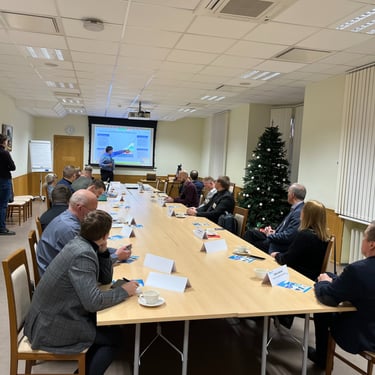
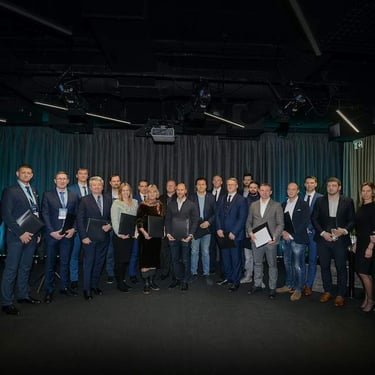
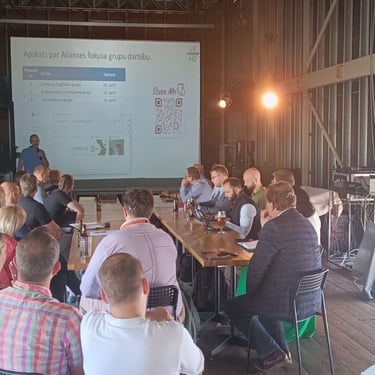
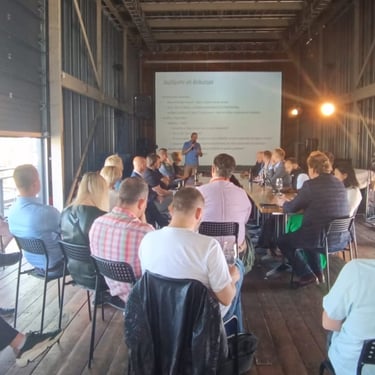
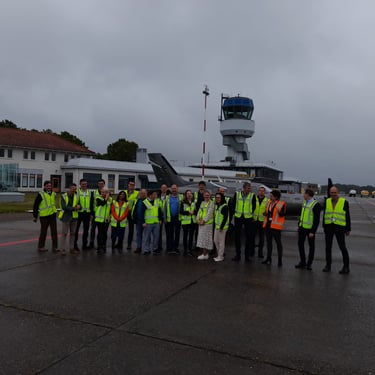
Latvijās Ūdeņraža Alianse (Latvian Hydrogen Alliance or simply Hydrogen Latvia) is a voluntary collaboration forum (round table) for private and public companies, organizations and universities aimed to collaborate in establishing Hydrogen ecosystems in Latvia and accelerating introduction of renewable Hydrogen technologies.
Lithuanian Hydrogen Energy Association (LHEA)
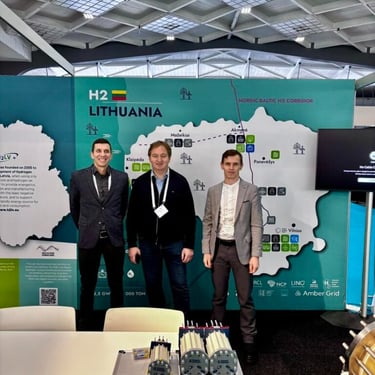
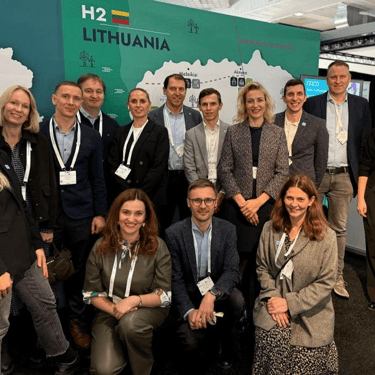
The Lithuanian Hydrogen Energy Association (LHEA) is a non-profit organization focused on promoting the development of hydrogen energy in Lithuania. It brings together various stakeholders, including research institutions, universities, and companies, to advance hydrogen production, storage, transportation, and applications. The association also actively participates in formulating national and EU hydrogen strategies and policies.
HyTruck project (January 2023 - December 2025)
https://interreg-baltic.eu/project/hytruck/
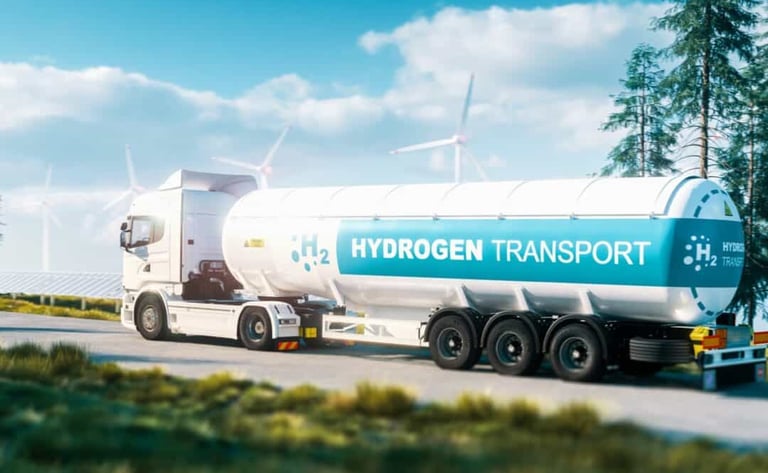
A review of the past years of hydrogen mobility projects in the Baltic States shows that HyTruck has delivered some of the most concrete and policy-relevant outcomes for hydrogen refuelling station (HRS) planning in Latvia and Lithuania. Rather than remaining at a conceptual level, the project translated AFIR requirements, TEN-T traffic realities, and market constraints into actionable spatial layouts and early-stage business logic.
Latvia: spatial clarity under market uncertainty
In Latvia, HyTruck’s work—led by the Vidzeme Planning Region—addressed a fundamental bottleneck: the absence of both hydrogen supply and anchor demand. The spatial development concept identified Salaspils (A5 / Riga logistics node) as the most robust near-term HRS location, aligned simultaneously with TEN-T traffic flows, AFIR distance requirements, and national alternative fuels planning. Secondary nodes (Ventspils, Liepāja, Jelgava, Jēkabpils) were positioned as part of a phased rollout, contingent on vehicle uptake and public co-financing.
See report for Latvia
Crucially, the Latvian case made explicit what many hydrogen strategies avoid: private investment in early HRS is not bankable without state intervention. HyTruck therefore reframed HRS not as standalone assets, but as public-interest infrastructure, requiring CAPEX support, risk-sharing mechanisms, and synchronization with truck deployment. This clarity significantly reduces planning risk for both policymakers and first movers.
Lithuania: corridor logic and regulatory readiness
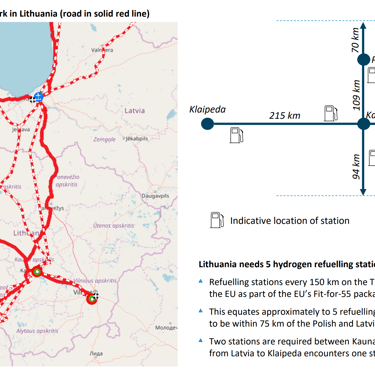
In Lithuania, the focus shifted from “if” to “where and how fast”. The spatial development concepts for Kaunas and Panevėžys regions translated AFIR and TEN-T (Via Baltica, E67, E85) obligations into a corridor-based HRS network, anchored in logistics intensity, proximity to industrial demand, and future hydrogen supply options. HyTruck’s Lithuanian outputs stand out for their depth of regulatory and readiness analysis, mapping concrete legal gaps, permitting barriers, and standardisation needs. This created a pragmatic roadmap for ministries and municipalities, positioning Lithuania closer to implementation-ready hydrogen corridors, rather than isolated pilot stations.
Business case modelling: realism over hype
Across both countries, HyTruck’s techno-economic and business modelling delivered a consistent message: HRS economics depend overwhelmingly on utilisation and policy design, not technology choice alone. The modelling shows that without sufficient truck volumes, even optimised gaseous or liquid HRS configurations remain structurally uncompetitive versus diesel.
As a result, the project reframed hydrogen freight infrastructure as a system transition challenge, where spatial planning, vehicle deployment, subsidies, and standards must evolve together. This systemic framing is arguably HyTruck’s most important contribution to the Baltic hydrogen discourse.
A Baltic takeaway
HyTruck analysis confirms that Latvia and Lithuania are not lagging in planning—but in sequencing. HyTruck’s legacy is therefore not just maps or reports, but a shared investment logic: start with corridors, concentrate demand, de-risk early assets, and treat HRS as enabling infrastructure for climate-neutral freight.

H2-SEAS – Hydrogen for Zero-Emission Coastal Fishing
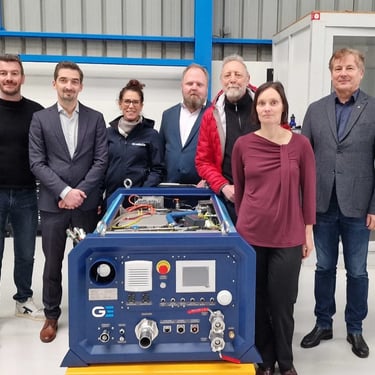
The H2-SEAS project is advancing one of the most promising hydrogen maritime innovations in the Baltic region: a zero-emission hydrogen-electric fishing vessel designed specifically for small coastal fleets. Coordinated by Riga Technical University and supported by European partners, the project develops and demonstrates hydrogen fuel cell propulsion for fishing vessels, replacing conventional diesel engines with clean hydrogen-based power systems.
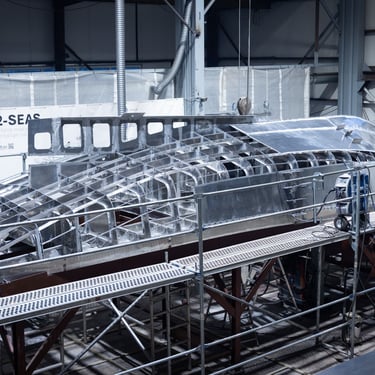
At the core of H2-SEAS is the design and construction of a 12-metre hydrogen fishing vessel powered by marine-certified hydrogen fuel cells and electric propulsion. The concept demonstrates how hydrogen vessels can deliver zero-emission maritime transport, while reducing noise, fuel consumption, and environmental impacts on marine ecosystems. The initiative provides a practical blueprint for introducing hydrogen maritime technologies in coastal fisheries across the Baltic Sea region.
Beyond the vessel itself, the project also explores the broader hydrogen maritime ecosystem, including operational safety, regulatory frameworks, environmental performance and integration with emerging hydrogen supply chains. These insights contribute to the development of scalable hydrogen solutions for maritime transport, strengthening the role of the Baltic region in Europe’s growing hydrogen economy.
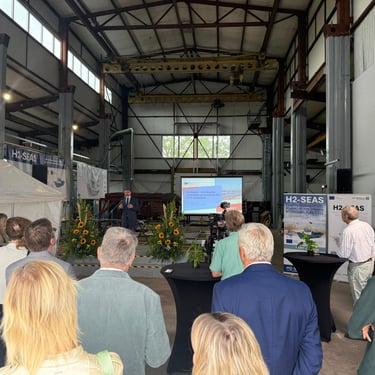
With the first vessel now moving into the construction phase, H2-SEAS represents a concrete step toward commercial hydrogen vessels in European fisheries. The project highlights how regional innovation can accelerate the deployment of hydrogen-powered ships, maritime decarbonisation and sustainable blue economy solutions across the Baltic Sea.
Panevėžys (Lithuania) Hydrogen Valley initiative
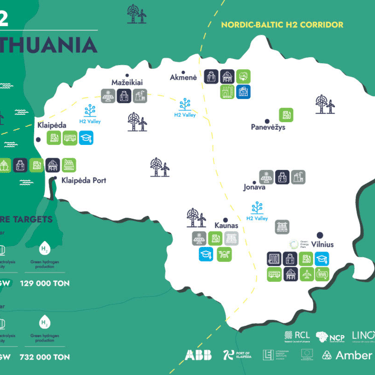
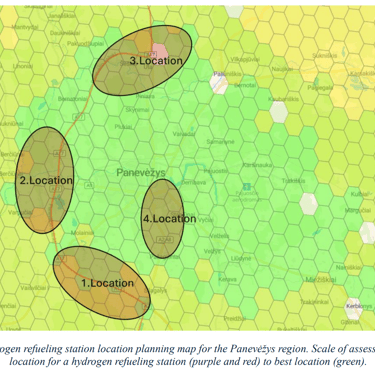
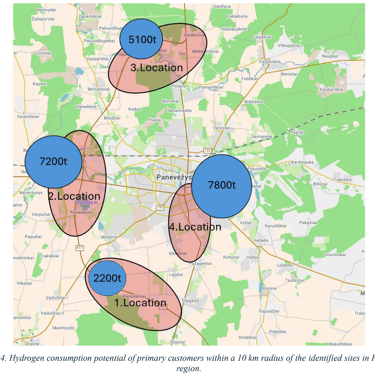
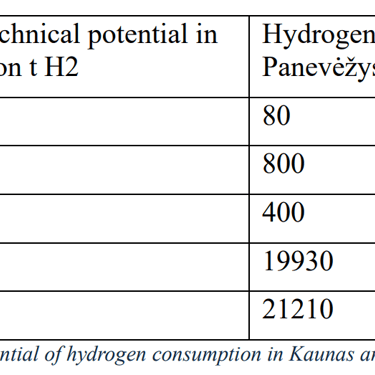
Hydrogen refueling infrastructure concept in the pilot region: Kaunas and Panevėžys regions
The Panevėžys Hydrogen Valley initiative is developing as a regional hydrogen, renewable gas and clean mobility ecosystem in one of northern Lithuania’s key industrial and logistics centres. Public planning work already identifies Panevėžys as a priority hydrogen infrastructure location on the E67 / Via Baltica corridor, with candidate sites assessed for heavy transport demand, grid readiness and future on-site hydrogen production.
One of the strongest locations reviewed in the region combines existing fuelling infrastructure with 11 MW of available grid capacity and around 7,200 tonnes per year of projected primary-customer hydrogen demand.
An important addition to this regional story is Engerta, whose biomethane plant in Šilagalis, Panevėžys district, is designed to process food and agricultural waste into renewable gas for transport and wider gas network use. Publicly available project information shows planned capacity of up to 500 m³/h and around 4.4 million m³ of biomethane per year, while later reporting indicates the plant has entered operation as Lithuania’s first biomethane facility connected to ESO’s distribution network. This gives the Panevėžys initiative not only a hydrogen mobility angle, but also a practical circular-economy and renewable gas foundation. Engerta is also exploring a next-step role in the Panevėžys Hydrogen Valley through the potential supply of biogenic CO₂ from biomethane production for future synthetic methane or RFNBO fuel pathways. That direction fits broader Lithuanian market logic: Amber Grid has highlighted biogenic CO₂ and green hydrogen as key feedstocks for synthetic sustainable fuels, and Lithuanian energy actors have already participated in projects focused on converting hydrogen into synthetic methane. If realised, this would move the Panevėžys region beyond stand-alone biomethane and toward an integrated hydrogen and carbon utilisation model with stronger value creation potential.
PUR4LH2 – Cryogenic Insulation for Hydrogen Aviation
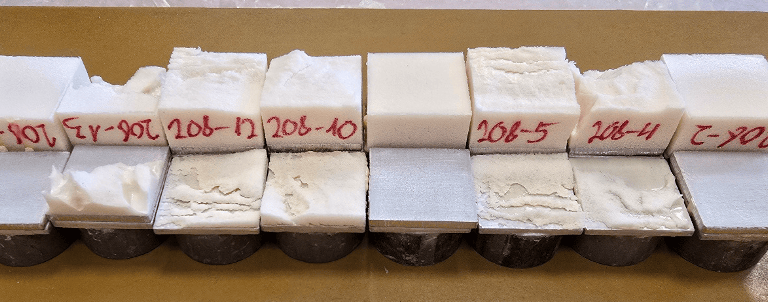
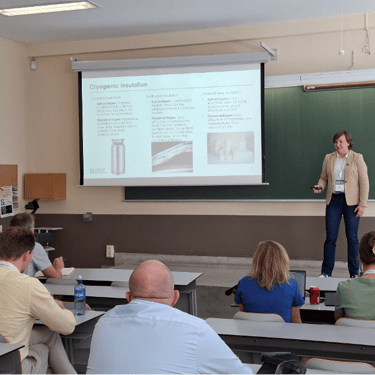
The PUR4LH2 project tackles one of the quietest but hardest problems standing between hydrogen and flight: how to keep liquid hydrogen at roughly –253 °C inside an aircraft tank that must take mechanical load and stay certifiable for two decades. Run by the Polymer Laboratory of the Latvian State Institute of Wood Chemistry (LVKĶI) and led by Dr. Vladimirs Jakušins, the project develops a rigid polyurethane foam designed to insulate LH₂ tanks for the next generation of zero-emission commercial aircraft.
At its core, PUR4LH2 is a deeptech materials innovation rather than an aircraft concept. The foam compositions are built on polyols from renewable feedstock, heavy-metal-free catalysts and low-GWP blowing agents — chemistry that keeps the material on the right side of the EU's tightening F-gas Regulation, which brings insulation foams into scope from 2033. The target is a system with a service life of at least 20 years that meets aviation safety and qualification requirements. In its first year, the team screened 70 polyurethane systems and narrowed them to six for pilot-scale optimisation, with long-term ageing and repeated cryogenic cycling tests to follow.
This competence isn't built from nothing. The same Riga laboratory developed cryogenic insulation that flew on the European launcher Ariane 6 — recognised as one of Latvia's most significant scientific achievements of 2024 — and PUR4LH2 points that space-grade heritage at civil aviation. The work is plugged into European cryogenics research and training networks, positioning a Baltic institution inside the international web that is qualifying hydrogen aviation's enabling technologies, not watching it from outside.
The significance for the region runs beyond a single aircraft tank. The same insulation systems that serve aircraft also serve airport storage terminals and refuelling infrastructure — the ground-side build-out that has to mature regardless of when the first commercial hydrogen aircraft flies. PUR4LH2 is an exemplary case of Baltic deeptech contributing to the hydrogen technology value chain, and a demonstration of why the region's deep R&D and academic knowledge base in materials chemistry and cryogenics deserves more projects and pilots built on top of it. The talent and the science are already here; the task now is to back them.
HYIPTRAIN (EIT Urban Mobility project) – The Digital Brains of the Hydrogen Train Retrofit
Every hydrogen retrofit of a diesel train needs tanks, injectors and engine modifications — and all of those have existed in some form for years. What had not been finished was the electronic control system that makes those parts behave as one safe, certifiable machine. Latvian engineering company SIA DIGAS has now developed exactly that, within the MASOC Competence Centre digital products programme, under research project „Pasažieru vilciena ūdeņraža iekšdedzes dzinēja kontroles sistēma” (No. D.3.1), financed by the EU Recovery and Resilience Facility.
MASOC describes the unit as the critical, previously missing component of the retrofit kit: it automates and coordinates fuel injection, combustion control and safety functions, joining mechanical and digital technologies through artificial intelligence and data analytics algorithms.
The value of that software is set by market reality. Around 7,200 diesel passenger trains run in Western Europe alone, and with an average service life of roughly 20 years, new hydrogen rolling stock can replace only a small slice of the fleet each year — leaving the large majority without a realistic renewable fuel route for decades. DIGAS puts conversion at approximately 20 times cheaper than buying a new hydrogen train. Replacing diesel with hydrogen cuts particulate emissions close to zero and nitrogen oxides by around 70%, and the engine runs noticeably quieter. The system has been demonstrated on what is described as the first retrofitted hydrogen internal combustion engine passenger train in Europe.
Its reach extends past a single trainset. The technology supports the European Green Deal target of a 90% cut in transport greenhouse gas emissions by 2050, and it is aimed specifically at the part of the network where electrification has never paid back — only 57% of EU rail lines are electrified, the remainder being largely regional, low-density corridors. The system will be manufactured in Latvia, strengthening the domestic mechanical engineering sector and its export capacity, with a target of €34.2 million in cumulative export revenue by 2031. DIGAS board member Petro Dumenko credits the Competence Centre structure with supplying not only financial leverage for the research but the influence and discipline that brought the project in at high quality and ahead of the original schedule.
For the Baltic hydrogen ecosystem, this entry is worth reading alongside HYIPTRAIN and HYBUHTRAIN as one continuous line of work: the retrofit kit, the battery hybridisation layered on top of it, and now the control software that governs both. What makes the control system distinct is where it sits in the value chain — engine control is the defensible, exportable part of a hydrogen powertrain, the part a competitor cannot simply source off the shelf. Most hydrogen strategy in this region is written around production; comparatively little of it is written around selling hydrogen technology into other markets, which is precisely what a Latvian-built control unit shipping into European fleets does. Alongside PUR4LH2 in aviation cryogenics and H2-SEAS in coastal maritime, it points at a pattern the region should be naming out loud: Baltic hydrogen value is accumulating in engineering, materials and software, not only in molecules.



HYBUHTRAIN (EIT Urban Mobility project) – Hydrogen–Battery Hybrid Retrofit for European Diesel Trains
The HYBUHTRAIN project is tackling one of European rail's hardest cost problems: how to decarbonise a diesel fleet that isn't due for replacement for another decade or two, without waiting for that replacement or for new overhead electrification. Approved through EIT Urban Mobility's Strategic Innovation Open Call, the project retrofits a diesel passenger train with a hydrogen internal combustion engine (H2-ICE) paired with a modular battery pack and energy management system, rather than a hydrogen fuel cell. It is led by Latvian company DIGAS — Europe's first certified gas-fuel locomotive developer — with Riga Technical University (RTU) providing independent scientific validation, as part of a five-partner consortium spanning Latvia, Ukraine and Poland.
At the technical core of HYBUHTRAIN is battery hybridisation of an existing hydrogen engine: the batteries recover energy under braking and top up overnight, cutting hydrogen consumption by an estimated 20–35% compared with running the hydrogen engine alone. The approach is expected to deliver stronger short-term power output than the diesel engine it replaces, a longer range between refuelling, and zero-emission running through stations and city centres — addressing local air quality as directly as fuel cost. DIGAS projects each retrofitted train could avoid roughly 200–230 tonnes of CO₂ per year, alongside a cut of more than 95% in nitrogen oxide and particulate emissions.
The project has 18 months to take the technology from TRL 6 to TRL 9 — from validated prototype to full certification — including a three-month passenger trial, targeting an SKPL-operated CD 810 series train in Poland. The retrofit is projected to cost roughly €0.9 million per train, around 13 times less than a new zero-emission train, a gap that matters because DIGAS estimates thousands of diesel trains built between 2000 and 2021 remain in service across six EU countries and are structurally suited to the same kind of conversion. HYBUHTRAIN builds directly on HYIPTRAIN, an earlier DIGAS project that developed and certified the underlying H2-ICE retrofit kit on a passenger train operated by SKPL in Poland — this is the second phase of a technology already proven once, not a first attempt.
HYBUHTRAIN is a useful marker for the Baltic hydrogen ecosystem beyond rail. It's a Latvian SME leading a multi-country European consortium, with a Latvian technical university supplying the independent validation that gives regulators and future customers a reason to trust the numbers — the same SME–academia pairing that recurs across the region's strongest hydrogen projects, from RTU's role here to LVKĶI's work on cryogenic insulation for hydrogen aviation. DIGAS has separately signed with Iarnród Éireann, Ireland's national rail operator, to retrofit a diesel freight locomotive using the same approach — a second live market for a solution developed in Latvia. As Europe's rail sector debates whether hydrogen has a viable business case at all, HYBUHTRAIN is a concrete, testable answer for the part of the fleet that battery-electric trains and full fleet replacement can't reach in the near term.


