Baltic Hydrogen Infrastructure Takes Shape: Liepāja Positioned in the Northern Europe Corridor
A new strategic partnership is accelerating the development of a Northern Europe–Baltic hydrogen ecosystem, placing Latvia firmly on the emerging hydrogen map. For PtXBaltic stakeholders, this signals a tangible shift from strategy to infrastructure and cross-border market integration.
NEWS
PtXBaltic
4/13/20262 min read
A strategic alignment around hydrogen transport
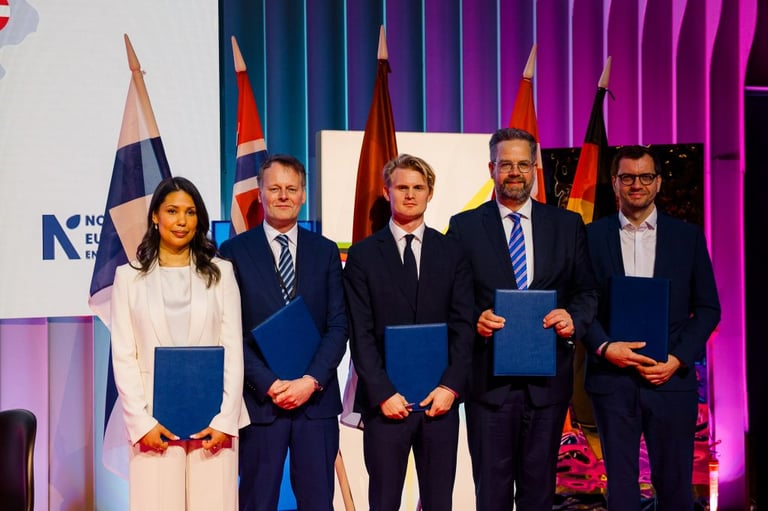
Recent developments in Liepāja point to a gradual but important shift in the Baltic hydrogen landscape—from individual initiatives toward more coordinated, cross-border infrastructure planning. A cooperation framework has been established between Northern Europe Energy Group, SEFE, and the Baltic Sea Hydrogen Collector consortium.
The focus here is not limited to hydrogen production. The emphasis is increasingly on transport, aggregation, and system integration, which are essential preconditions for a functioning hydrogen market across regions.
Liepāja exploring its role in the regional hydrogen network
Liepāja is taking steps to position itself within the evolving Baltic Sea hydrogen ecosystem. While still at an early stage, the city and its port are exploring how existing assets, geographic location, and access to renewable energy—particularly offshore wind—could support future hydrogen-related activities.
Rather than a defined hub at this point, Liepāja can be seen as one of several Baltic locations assessing its potential role in a wider corridor that may connect:
Nordic renewable hydrogen production areas
Baltic industrial and logistics nodes
Central European demand centres
This reflects a broader regional dynamic, where multiple ports and industrial areas are evaluating how to integrate into future hydrogen value chains.
Moving beyond production: toward system integration
A notable aspect of this initiative is the involvement of SEFE, which brings experience in large-scale energy trading and infrastructure. This suggests that discussions are extending beyond production concepts toward market integration and transport logistics.
Key areas under consideration typically include:
Development of pipeline and maritime transport solutions
Potential use or adaptation of existing gas infrastructure
Structuring of cross-border supply and offtake relationships
For the Baltic region, this type of approach is essential to move from fragmented projects toward coordinated and investable systems.
Implications for Baltic hydrogen ecosystem stakeholders
For stakeholders across Latvia, Lithuania, and Estonia, this development reflects a broader shift in how hydrogen projects are being framed.
There is increasing emphasis on:
Aligning projects with infrastructure and transport corridors
Understanding positioning within regional supply chains
Exploring export-oriented pathways, particularly toward larger European markets
This does not yet represent a mature market, but it does indicate that structural elements of that market are beginning to take shape.
A gradual transition toward regional hydrogen connectivity
From a regional perspective, initiatives like this illustrate how the Baltic Sea area is incrementally moving toward greater hydrogen connectivity.
Rather than rapid transformation, the current phase is characterised by:
Early-stage partnerships and positioning
Evaluation of infrastructure routes and nodes
Increasing involvement of larger European energy players
For Liepāja and similar locations, the trajectory remains exploratory—but aligned with a wider European direction where infrastructure, coordination, and cross-border integration will define future hydrogen development.