Baltic States sign Joint Statement on energy strategy coordination (11 Feb 2026): what it signals for hydrogen and renewables
Latvia, Estonia and Lithuania signed a Joint Statement on Energy Strategy Coordination on 11 Feb 2026, setting a framework for closer alignment on regional energy priorities. Notably, the document includes hydrogen and renewables among the topics where the three countries commit to cooperate by exchanging views.
POLICYNEWS
PtXBaltic
2/26/20262 min read
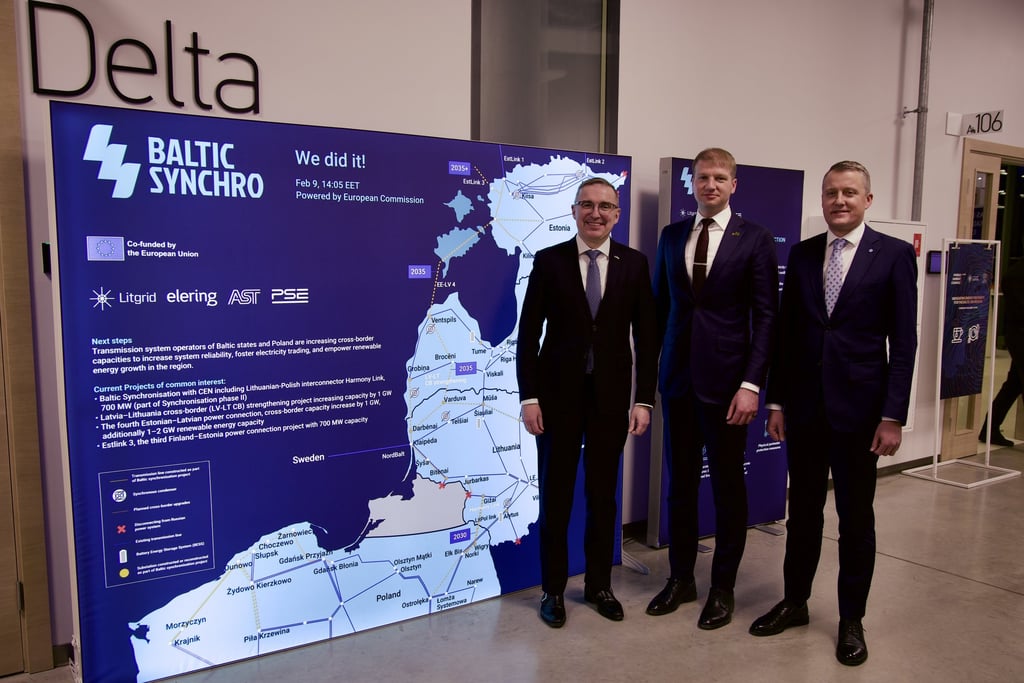
On 11 February 2026, Latvia, Estonia and Lithuania signed a Joint Statement on Cooperation in Energy Strategy Coordination. The document is short, but the intent is clear: keep national energy strategies aligned where it matters most—security of supply, system resilience, and the practical delivery of the transition.
From a Baltic energy-transition perspective, this kind of coordination is less about creating a new institution and more about reducing friction: aligning assumptions, sequencing infrastructure decisions, and keeping policy signals understandable for investors, system operators, and industrial energy users.
Where hydrogen and renewables appear in the Joint Statement
One line in the Joint Statement is particularly relevant for the Power-to-X and hydrogen community: the three countries commit to cooperate by exchanging views on a set of topics that includes hydrogen and renewable energy, CO2 capture and transport value chains.
That phrasing is deliberately modest—“exchanging views” is not the same as a binding target or a joint funding programme. Still, it matters because it places hydrogen and renewables inside the same coordination frame as broader energy-security and system-planning questions. In practice, this is where many of the real constraints sit: grid readiness, permitting, cross-border balancing, and the relationship between electricity and gas systems.
Why “coordination” is the operative word right now
The Baltic region has been moving through a period where energy policy is no longer only about decarbonisation pathways; it is also about system sovereignty and resilience. A visible milestone was the Baltic electricity grid synchronisation with Continental Europe (February 2025)—a shift that changes the operational context for planning generation, flexibility, and interconnection.
In parallel, EU-level regional cooperation structures such as BEMIP (Baltic Energy Market Interconnection Plan) increasingly frame the Baltic Sea region as a place where electricity infrastructure, offshore renewables, and the decarbonisation of gases (including hydrogen and biomethane) are discussed as connected pieces rather than separate silos.
Against that backdrop, the Joint Statement can be read as a political “keep-aligned” signal: coordination first, then implementation through national measures, EU instruments, and regional working formats.
What this could mean for hydrogen and PtX in the Baltics (without over-reading it)
Hydrogen is often discussed as a technology topic. The more difficult part is governance: how to align timelines and assumptions across borders so that projects can be sized and financed with fewer unknowns. If the “exchange of views” becomes a routine channel between ministries, a few practical areas could benefit:
Shared understanding of demand: industrial use cases, transport corridors, and potential offtakers that may be regional rather than purely national.
Infrastructure sequencing: how electricity grid upgrades, renewable build-out, and (where relevant) hydrogen-ready gas infrastructure are timed.
Rules and definitions: alignment on terminology, sustainability criteria, and how projects interface with EU frameworks.
Regional system value: treating hydrogen/PtX not only as end-use decarbonisation, but also as a flexibility option that interacts with variable renewables.
None of this is guaranteed by a joint statement. But coordination mechanisms—if used consistently—can reduce the “policy gap” that often appears between national strategies and cross-border project reality.
A note on tone: small commitments can still be useful
In energy policy, not every document is meant to announce a new programme. Sometimes the value is simply in making cooperation explicit and repeatable. For hydrogen and renewables, being named as topics for coordinated exchange is a small but concrete inclusion—one that can be referenced later when more detailed instruments and projects are discussed.
Source document: Joint Statement on Cooperation in Energy Strategy Coordination between Latvia, Estonia and Lithuania (Riga, 11 February 2026).