Ren-Gas Signs €1bn E-Methane Offtake Deal — the Financing Sequence Baltic PtX Needs
Finnish developer Nordic Ren-Gas has signed a binding €1 billion offtake agreement with Swiss renewable LNG group avanca Energy and Germany's largest renewable LNG distributor Alternoil for e-methane from its planned Tampere facility. We look at why the deal's sequencing — demand secured before final investment decision — matters more for Baltic Power-to-X than the headline figure.
NEWS
PtXBaltic
7/14/20265 min read
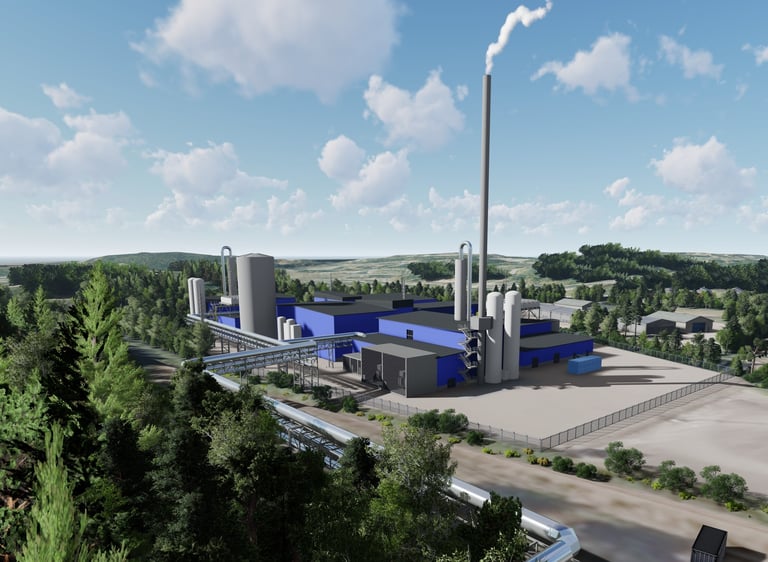
While still challenged by high costs and complex production chains, Power-to-X fuels are increasingly proving they can win real commercial contracts — and this month brought the clearest evidence yet from our northern neighbourhood. Nordic Ren-Gas, Finland's leading e-methane developer, has signed a binding long-term offtake agreement worth €1 billion with Swiss renewable LNG group avanca Energy AG and its subsidiaries, including Alternoil, Germany's largest renewable LNG distributor. The fuel will come from Ren-Gas's planned facility in Tampere, with first operations scheduled for 2028. The headline number is striking. But for Baltic hydrogen ecosystem stakeholders, the more valuable lesson sits in how this deal is structured, when it was signed, and what it quietly demonstrates about the region's route to Western European energy demand.
The deal at a glance
Value: €1 billion (around $1.15 billion) over the agreement's term — described by the partners as one of the largest commercial partnerships of its kind in Europe
Seller: Nordic Ren-Gas, from its planned facility in the Tarastenjärvi industrial and energy hub in Tampere, Finland
Scale: the site is set to integrate 50MW of green hydrogen production for e-methane generation, with capacity to be doubled in later phases; Hydrogen Insight puts annual output at roughly 11,500 tonnes of synthetic methane
Timeline: first operations scheduled for 2028
Buyer: avanca Energy AG, with avanca Renewables AG managing the group's renewable fuel portfolio and Alternoil GmbH operating 55 LNG fuelling stations and over 120 dispensing points across Germany
End use: drop-in fuel for heavy-duty trucking, distributed through existing gas infrastructure with no modifications to vehicles or fuelling stations
Context: the agreement adds to an earlier non-binding deal with Finnish energy firm Gasum for up to 800GWh of e-methane from Ren-Gas's planned Lahti and Kotka plants
Offtake first, steel second: the sequencing is the real story
Look closely at what has and hasn't happened in Tampere. The facility is fully permitted but not yet built. The final investment decision hasn't been taken. And yet a billion euros of demand is now contractually committed to it. That order of operations is deliberate — and it's the part of this story that deserves the most attention from project developers in our region.
Taaleri, the Helsinki-based investor behind Ren-Gas, was explicit about the mechanics: the signing is a significant step towards the final investment decision for the Tampere facility, and it unlocks the final tranche of Taaleri's own investment in the company. In other words, the offtake agreement isn't a marketing milestone bolted onto a finished project. It is the financing instrument that makes the project bankable. Lenders and equity investors in Power-to-X don't fund megawatts; they fund revenue certainty. Ren-Gas built the revenue certainty first.
The contrast with the company's earlier Gasum agreement sharpens the point. That deal — up to 800GWh from the planned Lahti and Kotka plants — was non-binding. Useful for signalling, but not something a bank can lend against. The avanca agreement is binding, and that single word is why it moves the FID needle where the earlier announcement couldn't. Too many European PtX projects have stalled in the gap between permits and construction precisely because they tried to reach FID on announced capacity and hoped-for demand. This deal shows the sequence that actually closes the gap.
The buyer's side tells you where the demand actually is
It's worth pausing on who is paying. avanca Energy isn't a policy body or a strategic investor making a bet on future markets — it's a fuel retailer with trucks queuing at its pumps today. Through Alternoil, the group runs Germany's largest renewable LNG distribution network, and through avanca Renewables it manages a portfolio of bio-LNG and e-methane sourcing across Europe. The group covers the whole chain from molecule to nozzle: logistics, buffer stocks, last-mile delivery.
That matters because it locates the demand pull precisely: German heavy road transport, running on LNG today, looking for a renewable molecule that drops into the same tanks. avanca's CEO Jürgen Muhle framed the appeal as low carbon intensity combined with commercial competitiveness — decarbonisation value that LNG-powered operators can buy now, not in 2035. When the buyer's business case is this concrete, the offtake is credible enough to finance a plant against.
A corridor running on pipes that already exist
The second thread worth pulling is geographic. This is a Nordic-to-German renewable fuel corridor — Finnish production, German consumption — and it requires no new pipelines, no new terminals, no new trucks. E-methane is chemically equivalent to biomethane and to fossil methane, which means it moves through the gas grid, liquefies at existing facilities, and burns in existing engines. The infrastructure debate that dominates pure hydrogen exports — who builds the pipeline, who pays for it, when does it arrive — simply doesn't apply here.
That is a strategic signal for the whole Baltic Sea region. Finland sits on the same regional gas system we do — the Balticconnector links the Finnish and Baltic grids — and it shares the same fundamentals: competitive Nordic-Baltic renewable electricity, abundant biogenic CO₂, and established gas infrastructure pointing towards Central European demand. Ren-Gas has just demonstrated that a producer in this region can sign a billion-euro contract with a Western European buyer using nothing but those existing assets. The corridor concept that Baltic hydrogen strategies talk about in future tense is, for e-methane, already operational in principle.
Sector coupling is the quiet cost lever
How does a first-of-a-kind synthetic fuel compete on price with fossil LNG plus a green premium? Ren-Gas's answer is integration. The company's production model couples renewable electricity procurement, green hydrogen production, biogenic carbon capture, methanation — and district heating. The waste heat from electrolysis and methanation isn't vented; it's sold into Tampere's district heating network. Every unit of heat sold is revenue that a standalone e-fuel plant doesn't have, and it lifts overall energy efficiency while cutting the effective cost per tonne of fuel.
Baltic hydrogen ecosystem stakeholders should read that model with particular interest, because the ingredients are unusually well-matched to our region. Latvia, Estonia and Lithuania all operate extensive district heating networks — legacy infrastructure that suddenly becomes a monetisation channel for electrolyser waste heat. The region's biomethane plants and biomass CHP facilities are ready sources of biogenic CO₂, the feedstock that keeps e-methane RFNBO-compliant. The Ren-Gas blueprint isn't exotic; it's a recombination of assets that Baltic cities already have.
The honest caveats
None of this is a done deal in the physical sense. FID for Tampere hasn't been announced yet, the contracted volumes haven't been disclosed, and first molecules are two years out at the earliest. E-methane itself carries well-known criticisms: production is energy-intensive and costly, and its climate benefit depends entirely on low-carbon electricity, sustainably sourced CO₂, and tight control of methane leakage across the chain. Those conditions are achievable — the sector-coupled Finnish model is arguably designed around them — but they are conditions, not givens.
What to take from it
Three lessons travel south across the Gulf of Finland. First, bankable demand beats announced megawatts: the projects that reach FID are the ones that secure binding offtake early, and buyers with real fleets — not just strategic interest — are the counterparties worth pursuing. Second, the fastest route from Baltic renewables to Western European wallets may run through molecules that existing infrastructure already handles, with e-methane and other drop-in Power-to-X fuels sidestepping the pipeline question entirely. Third, the cost structure that makes it work is sector coupling — and district heating networks, biogenic CO₂ sources and gas grid access are assets the Baltic states hold in abundance. Ren-Gas has written a playbook in Tampere. The ingredients to run it exist in Riga, Tallinn and Vilnius too.
Source: Nordic Ren-Gas and avanca/Alternoil Sign EUR 1 Billion Renewable E-Methane Offtake Agreement