From trade mission to project pipeline: what an Estonia–Latvia hydrogen week in the UK signals
A joint Estonia–Latvia hydrogen delegation to the UK offered a compact look at how collaboration formats can accelerate real project pipelines—from supply chain matchmaking to infrastructure and bankability questions. Here’s what stood out from a Baltic PtX perspective, and what to watch next as regional hydrogen plans move from strategy to delivery.
NEWSEVENTS
PtXBaltic
2/17/20262 min read
Hydrogen is often described as a “fuel of the future”. In practice, it’s the present-day work of coordination—between governments, developers, supply chains, researchers, and infrastructure operators—that determines whether hydrogen projects move from concept to commissioning.
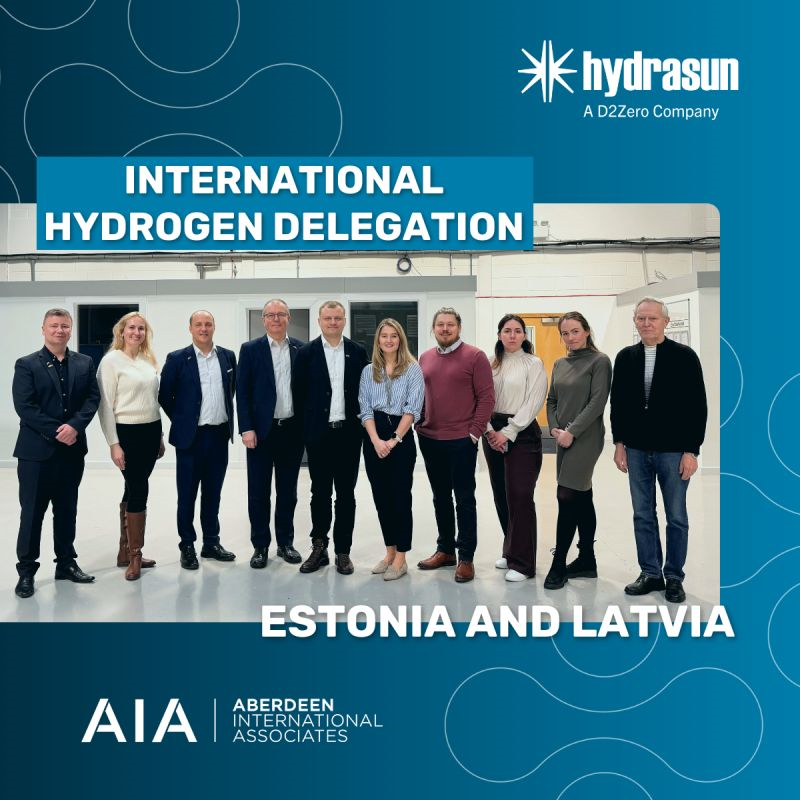
A recent Estonia–Latvia hydrogen-focused visit to the UK is a useful example of how that coordination can be organised in practice. The programme brought Baltic stakeholders into direct contact with UK counterparts across Scotland and England, using a joint, two-country format that helps compare priorities and identify practical next steps.
What happened (and why it’s relevant)
The delegation engaged with UK actors spanning local government, industrial supply chain, and applied research, and participated in the 7th UK CCUS & Hydrogen Decarbonisation Summit in Leeds.
According to the event organiser, the summit focuses on implementing CCS/CCUS within industrial operations and on how hydrogen can decarbonise industry and transport, convening 750+ stakeholders and an exhibition of 60+ technology and service providers.
For Baltic stakeholders, this kind of agenda is useful for three reasons:
It compresses the learning curve. It shows how project developers, councils, and supply chain companies interact when moving from planning to investment decisions.
It makes “infrastructure” concrete. Hydrogen discussions become real when comparing storage options, pipeline repurposing, port interfaces, and the practicalities of connecting producers to offtakers.
It surfaces bankability questions early. UK experience—both successes and bottlenecks—helps stress-test assumptions around demand aggregation, permitting timelines, and delivery models.
A Baltic lens: what to watch next
From a PtX platform perspective in the Baltics, the follow-up matters as much as the visit itself. The most valuable outcomes tend to come when contacts are translated into scoped workstreams and measurable next steps:
Translate contacts into workstreams. Separate technology supply conversations from project development support, financing, and policy/standards alignment.
Map UK capabilities to Baltic gaps. The Baltics have renewable potential and growing industrial interest, but still need clearer pathways for transport, storage, and cross-border offtake structures.
Keep the Estonia–Latvia angle. Joint missions can evolve into shared learning on permitting, coordinated approaches to hydrogen-ready infrastructure, and practical cross-border cooperation—especially where networks and ports are part of the story.
Why this matters for PtX in the Baltics
The hydrogen economy in the region will not be built by announcements alone. It will be built by repeatable collaboration formats that connect:
Project developers with credible offtakers
Infrastructure operators with port and industrial planners
Technology providers with local permitting and delivery realities
Policy teams with what actually blocks investment
Trade missions are not the end goal—but they can be a practical starting point when designed around real project questions and followed by disciplined execution.
LinkedIn Post - Hydrasun Hosts Estonian and Latvian Delegation