HyTruck outcomes in Latvia and Lithuania: from spatial planning to investable hydrogen corridors.
A one-year reflection on HyTruck shows how Latvia and Lithuania translated EU hydrogen ambitions into concrete HRS spatial planning and realistic business logic. The project’s outcomes offer a rare, evidence-based view on how hydrogen freight corridors can move from strategy to investable infrastructure in the Baltic region.
NEWS
PtXBaltic
2/4/20262 min read
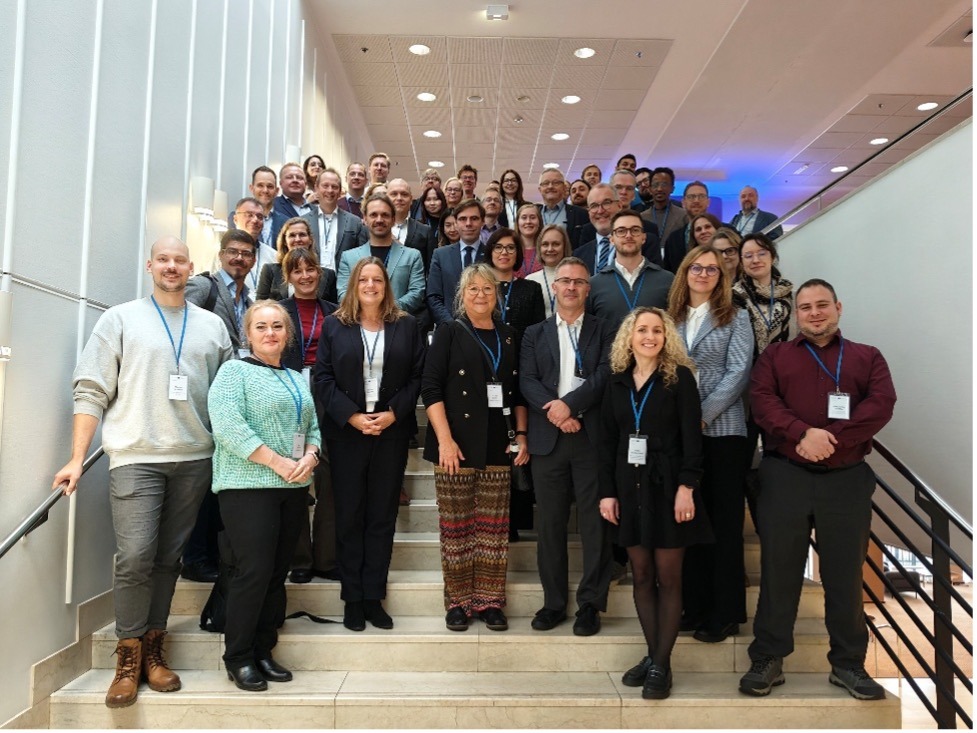
A review of the last year of hydrogen mobility projects in the Baltic States shows that HyTruck has delivered some of the most concrete and policy-relevant outcomes for hydrogen refuelling station (HRS) planning in Latvia and Lithuania. Rather than remaining at a conceptual level, the project translated AFIR requirements, TEN-T traffic realities, and market constraints into actionable spatial layouts and early-stage business logic.
Latvia: spatial clarity under market uncertainty
In Latvia, HyTruck’s work—led by the Vidzeme Planning Region—addressed a fundamental bottleneck: the absence of both hydrogen supply and anchor demand. The spatial development concept identified Salaspils (A5 / Riga logistics node) as the most robust near-term HRS location, aligned simultaneously with TEN-T traffic flows, AFIR distance requirements, and national alternative fuels planning. Secondary nodes (Ventspils, Liepāja, Jelgava, Jēkabpils) were positioned as part of a phased rollout, contingent on vehicle uptake and public co-financing.
Crucially, the Latvian case made explicit what many hydrogen strategies avoid: private investment in early HRS is not bankable without state intervention. HyTruck therefore reframed HRS not as standalone assets, but as public-interest infrastructure, requiring CAPEX support, risk-sharing mechanisms, and synchronization with truck deployment. This clarity significantly reduces planning risk for both policymakers and first movers.
Read more in report for Latvia
Lithuania: corridor logic and regulatory readiness
In Lithuania, the focus shifted from “if” to “where and how fast”. The spatial development concepts for Kaunas and Panevėžys regions translated AFIR and TEN-T (Via Baltica, E67, E85) obligations into a corridor-based HRS network, anchored in logistics intensity, proximity to industrial demand, and future hydrogen supply options. HyTruck’s Lithuanian outputs stand out for their depth of regulatory and readiness analysis, mapping concrete legal gaps, permitting barriers, and standardisation needs. This created a pragmatic roadmap for ministries and municipalities, positioning Lithuania closer to implementation-ready hydrogen corridors, rather than isolated pilot stations.
Read more in report for Lithuania
Business case modelling: realism over hype
Across both countries, HyTruck’s techno-economic and business modelling delivered a consistent message: HRS economics depend overwhelmingly on utilisation and policy design, not technology choice alone. The modelling shows that without sufficient truck volumes, even optimised gaseous or liquid HRS configurations remain structurally uncompetitive versus diesel.
As a result, the project reframed hydrogen freight infrastructure as a system transition challenge, where spatial planning, vehicle deployment, subsidies, and standards must evolve together. This systemic framing is arguably HyTruck’s most important contribution to the Baltic hydrogen discourse.
Read more in business analysis report
A Baltic takeaway
One year of HyTruck analysis confirms that Latvia and Lithuania are not lagging in planning—but in sequencing. HyTruck’s legacy is therefore not just maps or reports, but a shared investment logic: start with corridors, concentrate demand, de-risk early assets, and treat HRS as enabling infrastructure for climate-neutral freight.